

Understanding PFAS Regulations and Protecting Your Water Supply

As awareness grows about the health and environmental risks of perfluoroalkyl and polyfluoroalkyl substances (PFAS), otherwise known as “forever chemicals”, businesses and municipalities face new concerns about water safety. Updated federal and state PFAS regulations are taking effect, prompting many to ask how to know if their water is affected and what they can do about it.
Reynolds Culligan, a trusted leader in water purification and treatment solutions, helps individuals and organizations navigate these challenges with confidence and clarity. Learn more about PFAS regulations, how to assess your risks, and options we provide to reduce PFAS chemicals from your water.
PFAS Regulations: What You Need to Know
Water regulations are evolving rapidly as new research highlights the dangers of long-term exposure to “forever chemicals.” PFAS are synthetic chemicals used in countless consumer and industrial products, ranging from firefighting foams to waterproof fabrics. Because they resist breakdown, PFAS can persist in the environment, accumulating in soil, groundwater, and drinking water systems.
In 2024, the EPA introduced the first national drinking water standards for six key PFAS compounds, including PFOA and PFOS. These rules require public water systems to monitor and reduce PFAS levels below established limits to protect human health. Many states have gone further, enforcing stricter limits and expanding testing requirements.
To understand the scope of these regulations, consider these points:
- The EPA now mandates testing for specific PFAS compounds in all public water systems.
- States may impose additional limits and require more frequent monitoring.
- Local compliance helps prevent legal, financial, and health-related consequences.
- Regulations encourage private well users to also conduct independent tests.
Assessing Your Risk of PFAS Contamination
PFAS contamination can affect nearly any community, especially those near industrial zones, airports, and landfills, or areas where firefighting foams were historically used. Even private wells in suburban or rural settings may be impacted by runoff or aging infrastructure.
To evaluate your exposure risk, you can take the following precautions:
- Check local reports. Review your community’s annual water quality report for PFAS data.
- Consider your location. Determine if your area is near known PFAS contamination sites, such as factories or military bases.
- Consult the experts. Water treatment professionals can interpret results and recommend treatment options tailored to your water conditions.
- Test private wells. PFAS can migrate into groundwater, so well owners should also schedule regular lab testing.
Effective Strategies to Reduce PFAS from Your Water
Once forever chemicals are detected, reducing them requires advanced technology because standard water filters cannot address these resilient and enduring chemicals. To detect them, Reynolds Culligan offers a low-cost test kit which screens for five critical PFAS contaminants, as well as comprehensive laboratory testing.
Proven effective technology to reduce PFAS from water include:
- Activated Carbon Filtration. Granular activated carbon (GAC) captures PFAS compounds as water flows through the filter, significantly reducing contamination.
- Ion Exchange Resins. These specialized resins swap PFAS ions for safer alternatives, providing high-efficiency reduction for specific compounds.
- Reverse Osmosis (RO). RO systems use semipermeable membranes to separate PFAS molecules from water at a microscopic level for exceptionally pure results.
Reynolds Culligan integrates any combination of these methods into customized systems for commercial businesses, municipalities, and industrial facilities. Our water treatment experts design each solution for reliability, low maintenance, and long-term performance, ensuring lasting results for PFAS reduction.
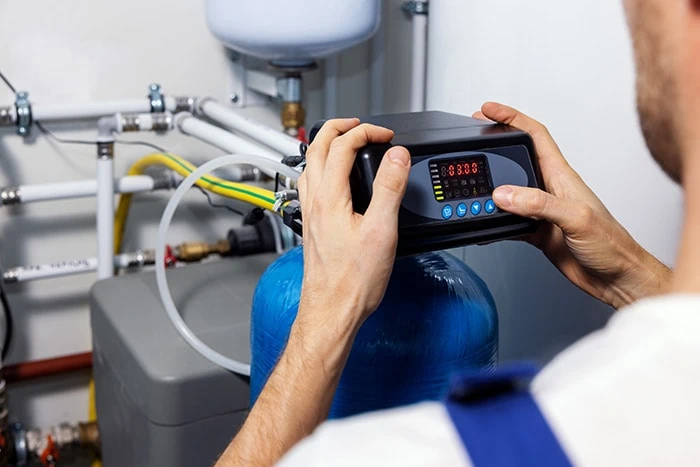


Reynolds Culligan: Your Partner in Advanced Water Treatment Solutions
Reynolds Culligan provides comprehensive PFAS testing and analysis, with clear, lab-verified results. Our specialists also interpret test data alongside regional standards, so you gain a precise understanding of your PFAS exposure and how it compares to operative PFAS regulations.
From restaurants to industrial facilities, we provide advanced water testing services, system maintenance, and filter design to keep your facility’s water clean, compliant, and safe. Contact us to speak with a water treatment specialist, and schedule a professional PFAS water analysis from Reynolds Culligan today.
Get a Free Water Analysis & Consultation
RO: “*Tested and certified by WQA against NSF/ANSI Standard 372, CSA B483.1, and NSF/ANSI Standard 53 for the reduction of Total PFAS. Aquasential® Reverse Osmosis Filtration with Total Defense are third-party certified to ANSI/NSF of Total PFAS. Aquasential® Reverse Osmosis Filtration with Total Defense are third-party certified to ANSI/NSF standards to reduce Total PFAS by standards to reduce Total PFAS by more than 99.99%.”
Whole home: “*Aquasential® Whole Home PFAS Filter with Smart Flow Monitor is third-party certified to NSF/ANSI standards to reduce Total PFAS by up to 99.99%”